Microsoft Teams migration, without the drama.
Move Teams and channels between tenants, or reorganize them inside your own. A few clicks. No scripts.
Trusted by 100,000+ IT pros

4.8★ on g2

4.7★ on Gartner
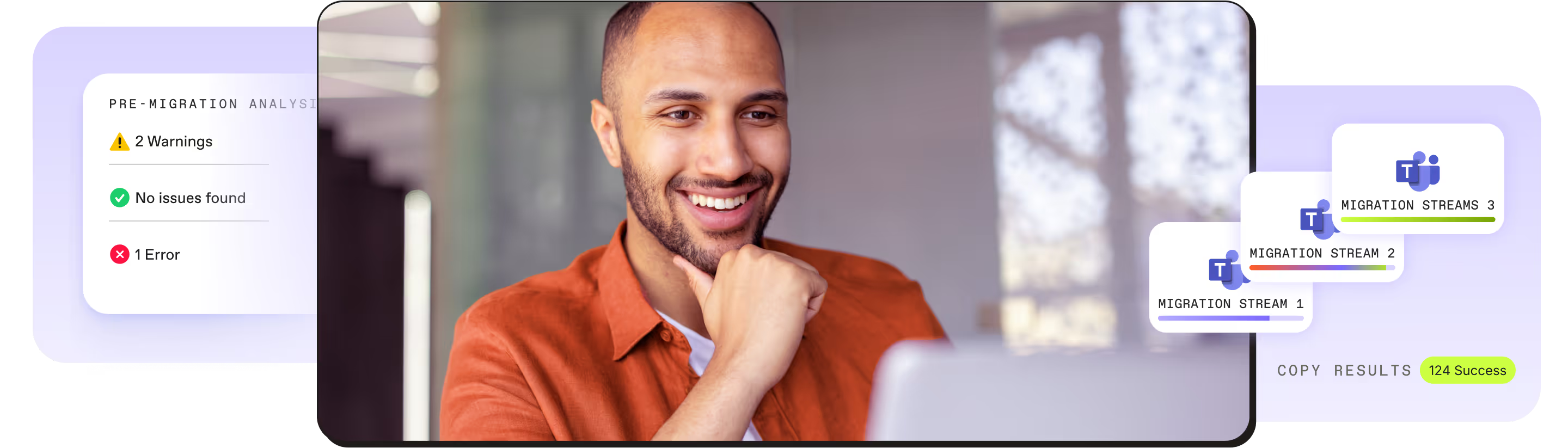
Move across tenants, or reorganize your own
Mergers, divestitures, carve-outs, consolidations—your Teams structure needs to reflect the org you have, not the one you started with.
- Move a whole team to another tenant, or copy it inside the one you have.
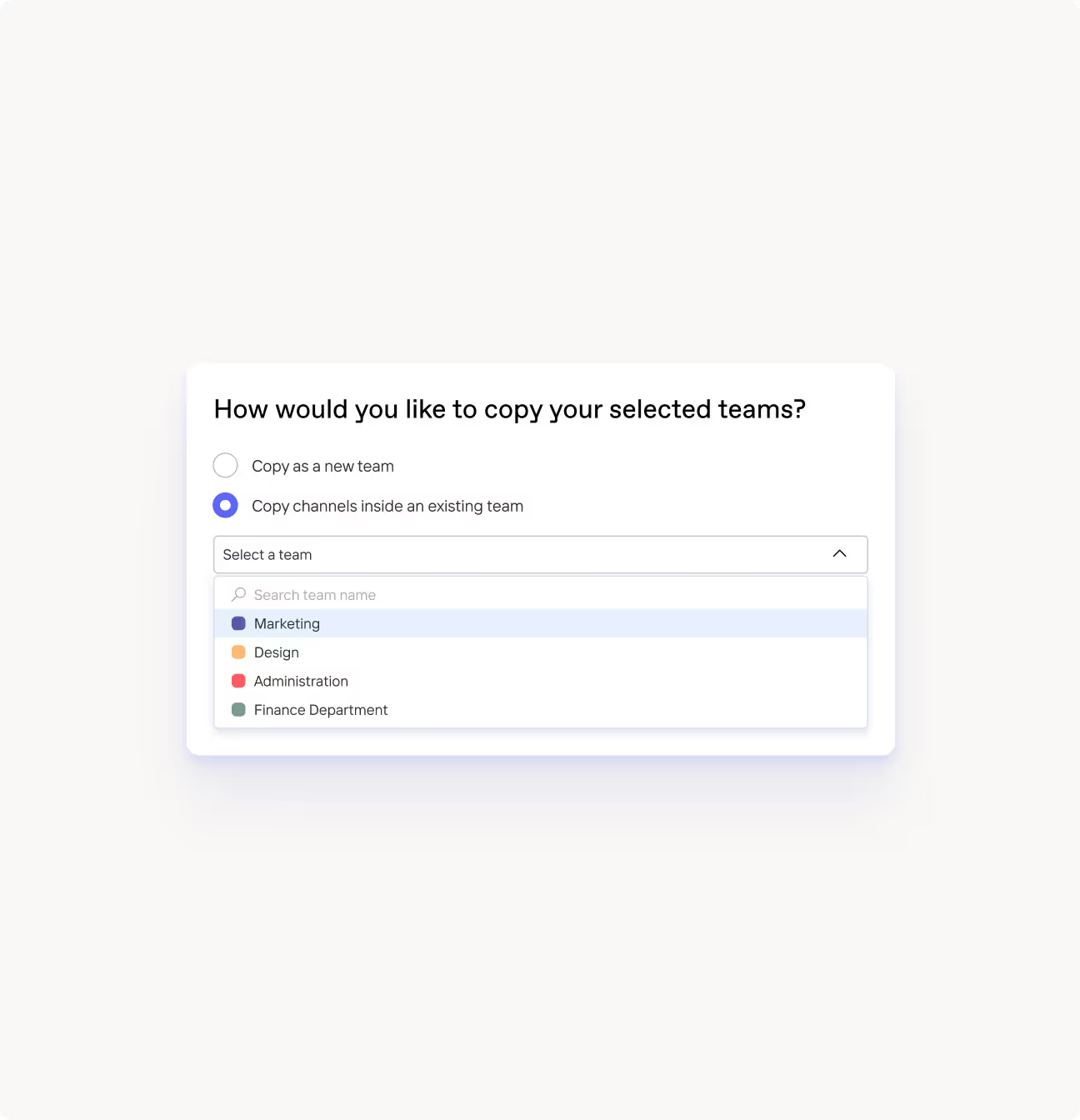
- Copy private and standard channels into another team.
- Move a team’s whole channel list, or just the ones that need to move.
- Conversations, files, tabs, apps, and Planner plans come along.
- Members and owners follow private channels. Public channels need members re-added.
- Migrate private chats—1:1s and group chats—with full history and real sender attribution, via PowerShell.
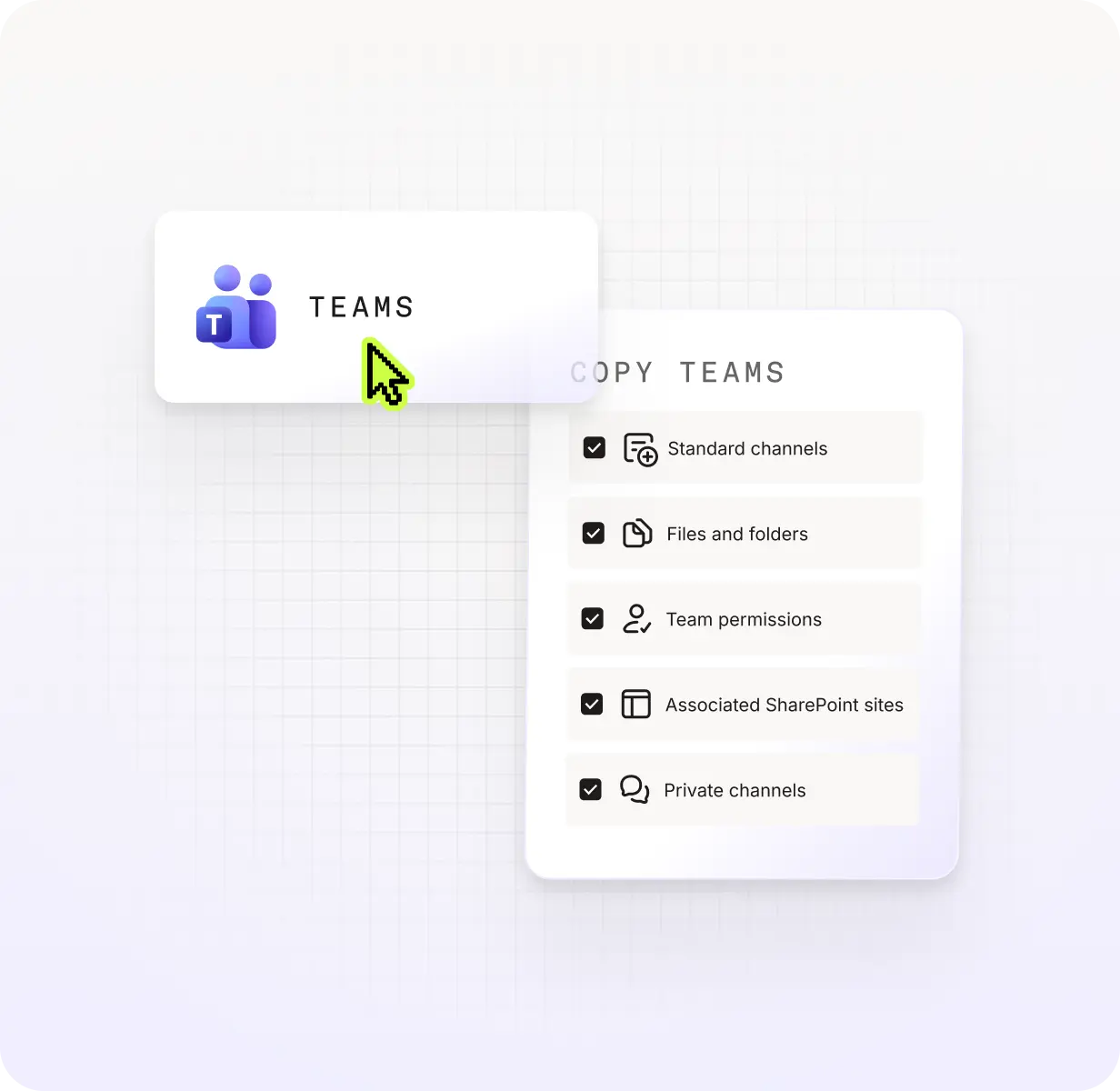
Everything we migrate

Teams apps

Standard channels

Team settings and description

Membership (owners and members)
Private channels

Team permissions

Lists and libraries

File history and metadata

Tabs

Planner plans

OneNote

Channel conversations

Files and folders

Associated SharePoint sites
SharePoint site customizations
Private chats (1:1s and group chats), via PowerShell
Why ShareGate
One tool for all your migrations
One price. However much you've got.
Unlimited teams, unlimited users, unlimited data. Same license whether you're moving 100 teams or 5,000. Scope your project without a calculator.
Works with Microsoft 365, not around it
Migrate runs on Microsoft Graph and Microsoft-supported migration APIs. No undocumented endpoints. No agents in your tenant. No background sync. What Microsoft 365 enforces, we work with.






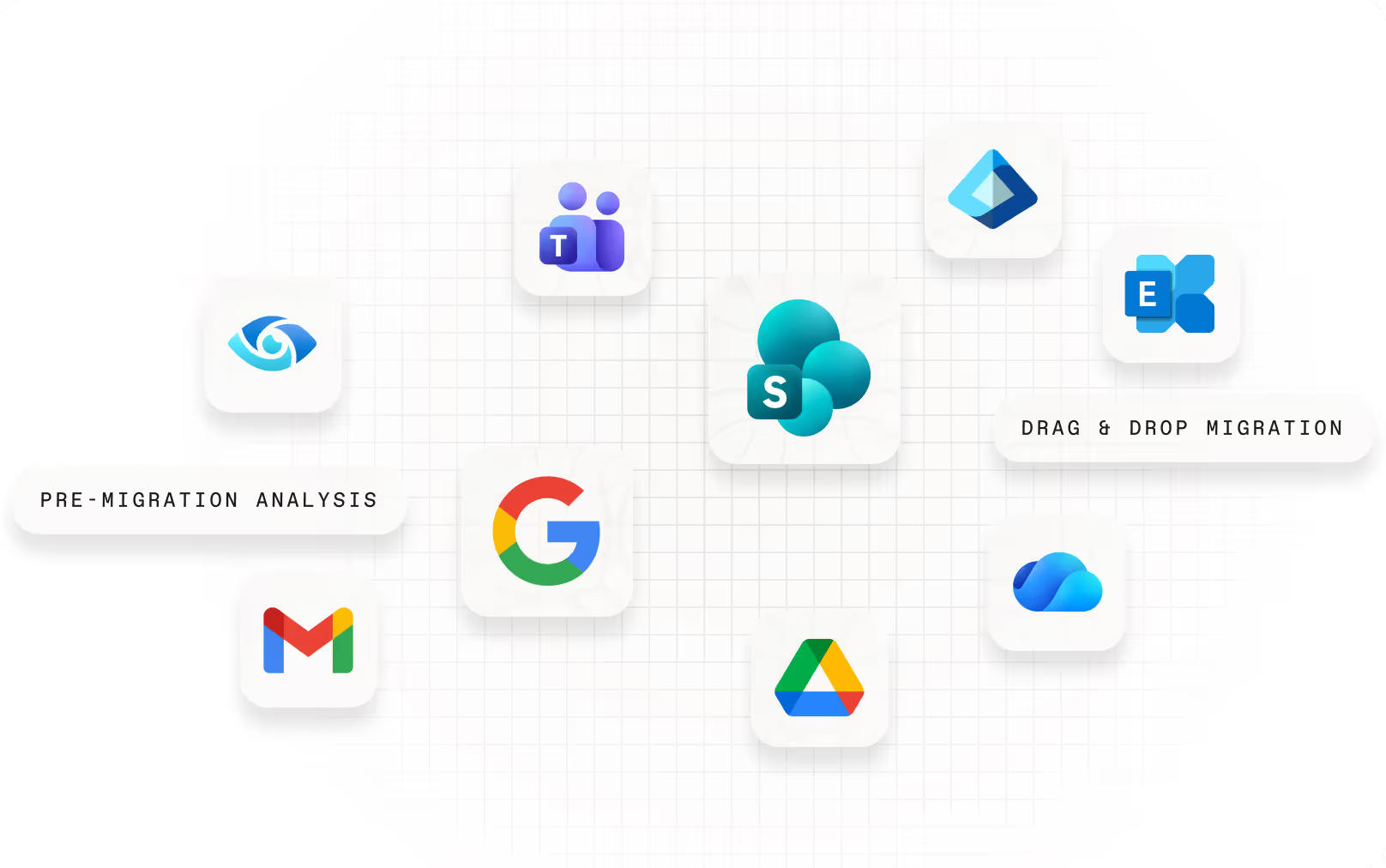
Migrate your entire tenant with one tool
ShareGate Migrate is the simplest, most reliable, and most trusted solution to migrate your users, mailboxes, and data to Microsoft 365.

Migration preparation

Accelerated migration
Post-migration optimization
Frequently asked questions

ShareGate's Copy Teams feature migrates Teams between tenants or moves channels between Teams. You connect to source and destination tenants, select the Teams or channels you want to migrate, then choose what to include: channel messages, files, tabs, apps, Planner, and membership.
You can run the migration immediately or schedule it, and incremental copies are supported.
Private chats—1:1s and group chats—can also be copied via PowerShell.
ShareGate migrates standard and private channels, channel conversations (posts and replies), files and folders, tabs and apps, Planner plans, team settings, permissions, and membership. The connected SharePoint site and Microsoft 365 group come along automatically.
Also included: team and channel descriptions, conversation authors and timestamps, file version history and metadata, lists and libraries, and OneNote. For what doesn’t come across, see the limitations question below.
ShareGate doesn't migrate user accounts between tenants. Users need to already exist in the destination tenant. ShareGate then maps source users to destination users to preserve Teams membership, permissions, and user-related metadata.
It automatically searches for matching users in the destination using account name, email, display name, and other properties. If automatic mapping doesn't find the right match or you want full control, you can create an explicit user mapping file (CSV or SGUM) and reuse it across migrations.
Commercial Microsoft 365 only. Copy teams doesn’t support GCC, GCC High and DoD, Microsoft 365 China operated by 21Vianet, or Microsoft 365 Germany.
Migrating the site separately means doing the work twice.
For Multi-Geo tenants, the Central Site is supported. ShareGate can’t migrate teams into the additional regions Multi-Geo creates, and migrated teams land on your default tenant domain. If data residency is driving the move, provision the team in the target region first, then copy channels into it.
ShareGate migrates apps from the Teams App Store, but custom apps aren't supported. Tab behavior depends on the type. Some tabs (like Wiki and Flow) aren't supported or need reconfiguration after migration. Microsoft tabs like Yammer, Power BI, Stream, Forms, and Whiteboard only work when migrating within the same tenant.
Third-party tabs typically copy over, but users usually need to reconnect and adjust settings. Tab order and some Files tab cloud storage folders can't be preserved during migration.
Most of them come down to what Microsoft’s APIs expose. Meeting recordings, the Teams Calendar, and shared mailboxes don’t migrate, because they live in Exchange rather than SharePoint. Neither do reactions, likes, tags, or message previews. Wiki tabs and custom apps are out, though Teams app store apps come across fine.
Some things arrive changed rather than missing. Dynamic group memberships convert to static, so you’ll rebuild the rules. Teams meetings tied to the Team calendar need recreating. User-specific settings like favorites, profile pictures, status, and saved messages aren’t preserved, and many third-party tabs need reconnecting at the destination. Channel conversations older than the most recent 50 land in a Message history tab, which isn’t covered by Teams search. Our docs carry the full list, kept current, with workarounds where they exist. Our docs carry the full list, kept current, with workarounds where they exist.
Migration speed depends on more than file size. The biggest factors are Microsoft 365 throttling and API call volume, driven more by item count and metadata complexity than raw gigabytes. Hardware, network latency, and where the machine sits all matter, as do content characteristics like custom permissions, versioning, and large lists or libraries. Most large projects run from an Azure VM in the same region as the tenant, which cuts latency.
The account running the migration needs Global Admin, or both SharePoint Admin and Teams Admin. It also needs a Teams license and must have signed into Teams at least once, otherwise ShareGate can’t see Teams content. One extra step: a Global Admin grants consent to the ShareGate Azure app on both the source and destination tenants. That’s separate from the migration account’s own permissions, and it’s one time only. No add-on or per-migration Microsoft license is needed, and destination users just need to exist in the target tenant with a standard Microsoft 365 assignment.
Private channels: yes, fully supported, along with their SharePoint site collection, membership, files, and conversations. Shared channels (Microsoft Teams Connect): not supported. If a team contains shared channels, they’re skipped during migration. No error, but nothing comes over either. If shared channels matter to your project, plan to recreate them at the destination and reconnect the external tenants.
Run a follow-up pass from the migration report to pick up what changed since your last run: new conversations and replies, updated files, membership, team and channel settings, Planner plans, and the associated site collections. One limitation worth planning around: channels added to a team after the initial migration aren’t picked up automatically. Migrate those as a standalone channel copy, then add them to the destination team.
Yes. ShareGate migrates Teams private chats—1:1s and group chats—with full history and real sender attribution, via PowerShell. Available in Migrate Pro and Enterprise. Read up on Teams private chat migration with ShareGate in our blog.
Both migrate teams and channels through the app. Pro and Enterprise add the PowerShell module, which is where you get sensitivity label migration, the ability to leave specific content out of a copy, and 500 channel conversations in the Posts tab instead of the default 50.
Microsoft Teams migration guides for IT admins

"ShareGate solves the complexity of migrating and managing SharePoint and Microsoft Teams environments. It streamlines tasks that would normally require a lot of manual effort—like moving sites, fixing permissions, … and reorganising Teams."
Don’t just migrate it, ShareGate it.