.svg)
.avif)
Microsoft 365 governance made simple
Fix what matters, faster, without complex rules or tool switching!
Free trial%20(1).avif)
Master Hacks: Migrate like a pro
Check out our video series to help you turn migration projects into masterpieces!
Table of contents
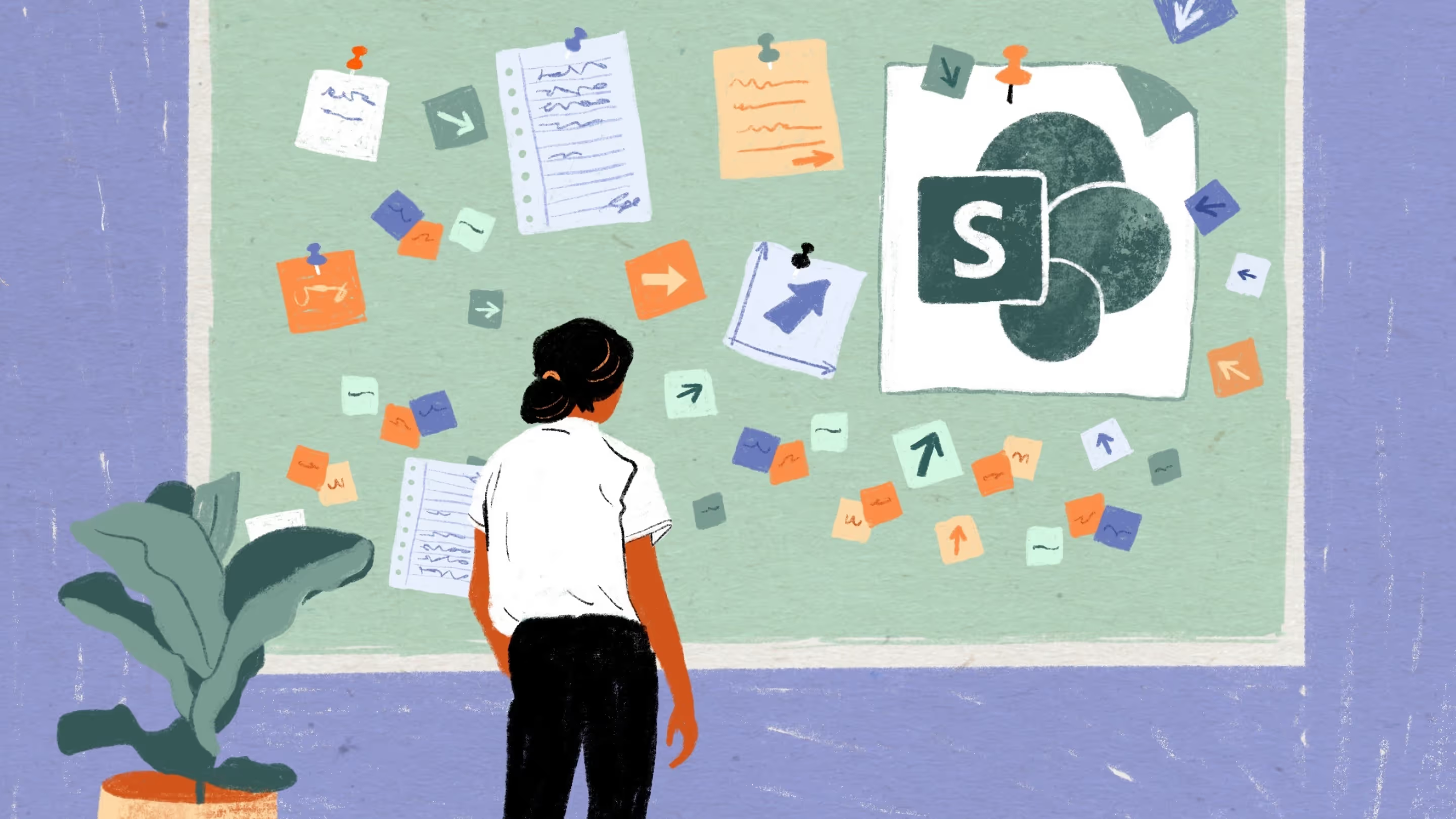
Self-service in Microsoft 365 has always been a double-edged sword. It empowers users to create Teams and SharePoint sites without waiting on IT, but over time, that freedom leads to sprawling environments. If you’re now faced with orphaned sites and outdated sharing links, it’s not a sign of mismanagement—those issues are an unfortunate byproduct of a platform built for flexibility.
Now, the rollout of Microsoft Copilot is raising the stakes. Since Copilot works within your existing SharePoint permissions, it can surface whatever your users already have access to. If content is outdated, overshared, or loosely governed, Copilot will find it, summarize it, and serve it to users who shouldn’t see it.
None of this will come as a shock to most IT admins. Managing guest access, inactive sites, and unclear ownership is part of the job. What’s changed is the speed and impact. Governance can’t be reactive anymore; it has to keep pace.
Simplify the process with this guide to SharePoint governance. We’ll provide a practical framework of roles, policies, and lifecycle processes that bring accountability to your environment without slowing down your team.
What’s SharePoint governance?
SharePoint Online governance is the set of processes, roles, and controls that manage SharePoint sites and content in M365. It covers everything from how sites are created and used to how content is retained, archived, or deleted so your environment stays secure, compliant, and manageable at scale.
Governance is an ongoing discipline that evolves with your environment. And now, it has direct AI implications. Microsoft Copilot surfaces content users have access to, which means your permissions, sensitivity labels, and metadata directly shape what Copilot can find and share. In other words, governance doesn’t just keep things organized; it controls what AI can do with your data.
Where SharePoint governance applies
SharePoint governance spans your entire M365 environment, including:
- SharePoint Online sites
- Teams-connected sites (created automatically when you create a team in Microsoft Teams)
- Communication sites
- OneDrive (where content is stored and shared)
- Microsoft Copilot (which surfaces any content a user already has access to)
What SharePoint governance covers
A strong governance framework defines how your environment works in practice, including:
- Site creation and provisioning: Who can create a SharePoint site or team (and under what conditions)
- Ownership and roles: Who’s responsible for each site and what happens when an owner leaves
- Permissions and access: Who can access content (both internally and externally)
- Information architecture and metadata: How content is structured, labeled, and made findable
- Sharing and collaboration: How files and sites are shared across teams and with guests
- Lifecycle management: How long sites stay active and what happens when they’re no longer needed
- Copilot access: What content AI tools can surface based on existing permissions
Why is SharePoint governance important?
Most Microsoft 365 environments don’t start with perfect governance—and that’s normal. Over time, as teams move fast and collaboration expands, small gaps turn into governance debt.
Without clear SharePoint governance policies, those gaps snowball into operational and security risks:
- Uncontrolled sprawl: Users create SharePoint sites and Microsoft Teams faster than IT can manage them. Over time, this leads to hundreds (or even thousands) of inactive or duplicate sites, making it harder for users to find the right content or a reliable source of truth (SOT).
- Inactive or ownerless sites: When projects end and employees leave, ownership often doesn’t get reassigned. The sites remain active but unmanaged, with no one accountable for the content or access.
- Permission drift and broken inheritance: Permissions change over time, often without documentation. Unique permissions stack up, inheritance breaks, and it becomes unclear who can access what.
- Outdated external sharing and guest access: Files and sites are shared externally for collaboration, but access isn’t always revoked when work is done. Former partners or guests may still have access to sensitive content months later.
- Poor content structure and low discoverability: Without clear information architecture or metadata, content becomes harder to navigate. Users duplicate files or recreate sites because they can’t find what already exists.
- Unintentional Copilot exposure: Because Copilot surfaces Microsoft 365 data based on existing access, it amplifies security gaps. For example, an employee may see confidential HR documents in a search summary if a folder with organization-wide sharing links was never canceled.
6 steps to create an effective SharePoint governance plan
Use the following steps as a template to bring accountability to your self-service environment.
1. Establish a governance committee
While you don’t need a massive, formal group to manage SharePoint, you do need support from other teams. Round up members from IT, security, and leadership to meet regularly. Together, review if your policies actually match how people work by checking:
- Initial goal: Define the baseline guardrails, like who can create sites and how long to keep data.
- Ongoing purpose: Members review sprawl and usage reports to spot risks like ownerless sites and excessive guest access.
- The deliverable: As the organization scales, the committee updates the SharePoint governance plan to include more automated processes. New tools like Copilot also change security requirements.
2. Define roles and responsibilities
SharePoint houses valuable and sensitive organizational data. If users are unclear about the correct protocols and business processes when using SharePoint, it will inevitably lead to an inefficient workplace, reduced productivity, and a heavy lean on technical support.
Use the template below to create a successful SharePoint governance strategy. Your system should include:
Governance steering committee: Develop a governance vision, policies, and standards with your committee for how your SharePoint intranet should be used and managed within your organization, and make sure that your business needs are being met.
Roles and responsibilities: Defining roles and responsibilities helps position the right person for the job in your governance plan and supports the efficiency of your organization. Create an easy-to-manage table with three columns:
- Role
- Responsibilities
- Name(s)
The roles may be different depending on your organization, but here’s an example of commonly used admin center roles:
| Role | Responsibilities | Name(s) |
|---|---|---|
| Governance committee |
- Assigns SharePoint roles and responsibilities - Evaluates objectives - Defines rules and processes |
|
| SharePoint administrator |
- Creates and deletes sites - Manages site collections and global SharePoint settings |
|
| User administrator |
- Adds users and groups - Assigns licenses - Manages most user properties - Creates and manages user views - Updates password expiration policies - Manages service requests - Monitors service health |
|
| Helpdesk administrator |
- Resets passwords for all non-admins and some admin roles - Manages service requests - Monitors service health |
|
| Message Center reader |
- Monitors and shares messages in Message Center - Has read-only access to Azure AD services, such as users and groups |
|
| Site owner | Creates and manages subsites, lists and libraries, and security | |
| Trainer | Creates training plans and implements all appropriate training |
3. Standardize site creation and naming
Self-service doesn’t have to mean total chaos. Allow users to create what they need while keeping the environment organized by:
- Implementing naming conventions: Use prefixes or suffixes to identify the department, project, or region connected with a SharePoint site.
- Using provisioning templates: Provide preconfigured site templates that include the right information architecture and default permissions from the start.
- Adding guardrails, not blocks: Instead of disabling self-service, use standard site classifications to make every new site categorized and searchable.
4. Set rules for access, sharing, and permissions
Maintain permission best practices without creating bottlenecks by:
- Controlling external sharing: Set tenant-level policies that limit guest access to approved domains and enforce controls like multi-factor authentication (MFA).
- Using sensitivity labels: Apply Microsoft Purview labels to classify content and keep highly confidential files encrypted and restricted.
- Auditing permission drift: Regularly review external sharing links and permissions to prevent Copilot from surfacing sensitive data to the wrong people.
5. Define lifecycle and review processes
Practical governance needs a plan for the end of a site’s life, not just the beginning. Without manual review, your tenant fills up with stale data that clutters SharePoint search, making search noisier, ownership unclear, and governance harder to enforce at scale. Make sure you:
- Set expiration policies: Use Microsoft-native tools to encourage site owners to renew or archive their inactive sites.
- Identify orphaned sites: Audit your environment for sites without active owners to make sure permissions don’t go unmanaged.
- Establish archival and deletion rules: Define clear timelines for when data should move to long-term storage and when to remove it from the environment.
6. Communicate governance expectations to end users
Microsoft governance works best when users understand the why behind decisions. Instead of long policy documents, give practical guidance to help users succeed. Be sure to:
- Publish a Service Desk guide: Create a simple page outlining how to request a new site and who to contact for permission help.
- Clarify owner responsibilities: Make sure every site owner knows they’re responsible for their site’s access list and content accuracy.
- Reinforce the benefit: Remind users how guardrails keep their collaboration secure and their search results relevant.
SharePoint governance best practices
Use these SharePoint best practices to maintain security without stifling content creation.
Empower employees with guardrails
Self-service creation supports productivity, but you’ll need to apply baseline protections first. For example, you may need stricter external sharing settings for SharePoint sites storing sensitive data. Or you may configure default sharing links to “People in your organization” instead of just “Anyone.”
Ensure accountability
Every site, including those connected to Microsoft Teams, needs an active owner. This person manages roles, reviews access, and makes lifecycle decisions.
Maintain lifecycle management
Don’t let inactive sites stick around. Every so often, prompt owners to confirm if their workspace is still needed. If they don’t respond, have a process in place to archive the SharePoint site automatically.
Trust, but verify
Review permissions and external sharing across SharePoint Online to catch those instances where temporary access becomes permanent. In a native environment, getting a clear view often means stitching together data from multiple admin centers or scripts, making it hard to see the full picture of who has access to what. Even so, this step is a must. It helps reduce your data surface area and cuts down on the risk of Copilot surfacing sensitive information to the wrong users.
Simplify SharePoint governance with ShareGate Protect
Building a governance framework is one thing, but maintaining it at scale is another. The challenge for most IT teams is a lack of visibility, not a lack of knowledge. And while Microsoft’s native tools are powerful, they often spread information across several admin centers and UIs. Governance starts to drift when you have to hop between screens to check guest access, orphaned sites, and retention policies.
ShareGate Protect is your support tool for SharePoint and M365 governance that brings all those moving parts together into a single view. It fills the visibility gaps that lead to sprawl and security risks.
With Protect, you can:
- See it: Every site, team, and OneDrive—all in one view. No scripts, no admin-center hopping, and no guessing.
- Understand it: Context and severity should be clear so you know what actually matters and what to clean up first.
- Fix it: Oversharing, guest access drift, ownership gaps, Copilot exposure risks. They're all visible. And fixable in minutes.
- Automate it: Set the rules once and let Protect enforce them continuously. Automated governance keeps up with Microsoft 365 so you don't have to.
Book a personalized demo with one of our experts to see how it works!





.avif)
.png)












Don’t just migrate it, ShareGate it.
Your source is never touched — ShareGate only copies.
Re-running is safe, included, and free.