.svg)

ROI-Rechner
Sehen Sie, wie viel Sie sparen können, indem Sie ShareGate Protect zur Verwaltung und Sicherung Ihres Tenants verwenden
Berechnen Sie Ihre Einsparungen%20(1).avif)
Master-Hacks: Migrieren Sie wie ein Profi
Schauen Sie sich unsere Videoserie an, die Ihnen dabei hilft, Migrationsprojekte in Meisterwerke zu verwandeln!
Inhaltsverzeichnis
Im Mai haben wir sechs Updates für Protect und Migrate veröffentlicht. Protect automatisiert jetzt in mehr Szenarien und gibt Partnern von Anfang an mehr Kontrolle. Migrate legt den Grundstein für sauberere Identitätsübergänge und widerstandsfähigere lokale Daten. Weniger manuelle Arbeit. Bessere Sicherheit. Hier ist, was neu ist.
ShareGate Protect Updates
Automatisierte Richtlinien: Optimierung der Arbeitsbereichsverwaltung
Die manuelle Verwaltung inaktiver Sites und verwaister Gruppen ist wohl niemandes Vorstellung von einer guten Zeit. Protects automatisierte Richtlinien decken jetzt Archivierungs- und Löschaktionen für SharePoint-Sites, Gruppen und OneDrives ab. Sie können diese direkt von jedem Arbeitsbereich oder OneDrive Insight aus festlegen oder alles zentral von der neuen Seite Richtlinien aus verwalten. Alle aktiven Automatisierungen befinden sich an einem Ort, sichtbar und einfach anzupassen. Ihre Umgebung bleibt sauber. Sie bleiben aus den Details heraus.

Partner-Arbeitsbereiche: Reduzierung von Setup-Verzögerungen
Als Partner mussten Sie wahrscheinlich schon darauf warten, dass Kunden ihre ShareGate-Konten einrichten, bevor Sie beginnen konnten. Jetzt ist diese Reibung beseitigt. Partner können jetzt Arbeitsbereiche direkt von ShareGate Home aus erstellen und Kunden als Arbeitsbereich-Administratoren einladen, was eine schnellere Wertschöpfung bedeutet.
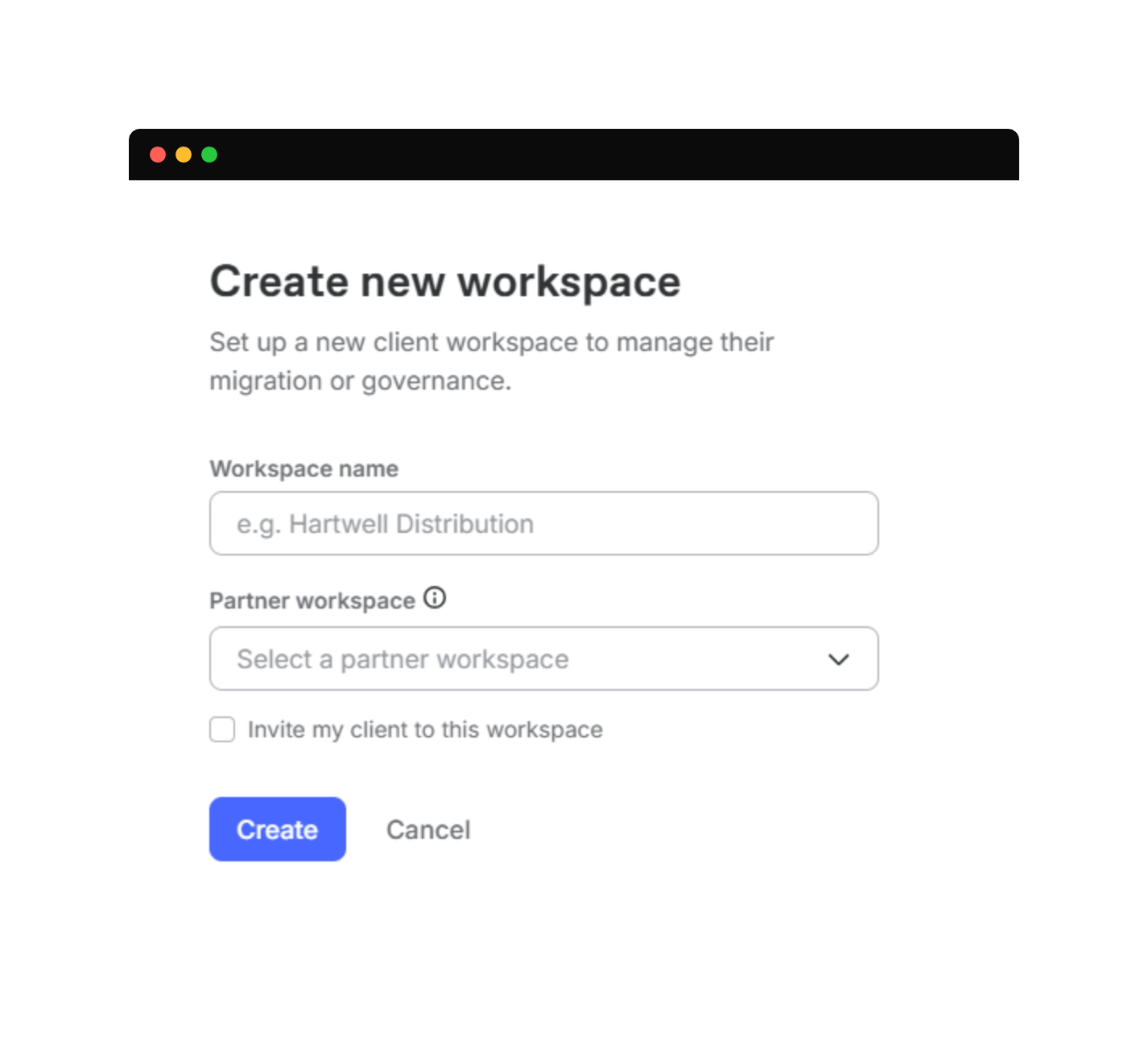
Protect-Bewertungen werden zu einem wiederholbaren, skalierbaren Service. Und das Engagement bleibt von Anfang an in Ihren Händen.
SSO-Integration: Stärkung der Sicherheit
Die separate Verwaltung des ShareGate-Zugriffs von Ihrem Identity Provider kann blinde Flecken schaffen wie verwaisten Zugang, Bereitstellungslücken oder Sicherheitsrisiken, die Sie lieber nicht in einem Meeting erklären möchten. Unsere neue SSO-Integration verbindet sich direkt mit Ihrem Identity Provider (einschließlich Entra ID) für einen einzigen Deprovisionierungspunkt.
Dies ist für alle Protect-Abonnements und Migrate Enterprise-Abonnements verfügbar. Es erfüllt die Anforderungen für Unternehmenssicherheit, was die Beschaffung erheblich vereinfacht.
ShareGate Migrate Updates
Entra ID Migration Preview Updates: Das Fundament für nahtlose Übergänge ist vollständiger
Die Identität ist der erste Schritt jeder Migration. Das zuverlässige Verschieben von Postfächern und Inhalten erfordert zunächst das vollständige Bild. Und jetzt haben Sie es. Das diesmonatige Entra ID Preview-Update fügt fünf Funktionen hinzu, die zusammen großangelegte Identitätsmigrationen handhabbarer machen:
- Manuelle Identitätszuordnung. Wählen, korrigieren oder überschreiben Sie, wie Benutzer zwischen Mandanten zugeordnet werden. Dies ist kritisch für Unternehmenskonten, M&A-Geschäfte und Veräußerungen, wo automatische Zuordnung nicht ausreicht.
- Vereinheitlichte Identitätsplanungsansicht. Ein Ort, um jede Identität vor Migrationsbeginn zu sehen und zu verwalten. Das Kontrollzentrum, das alles andere möglich macht.
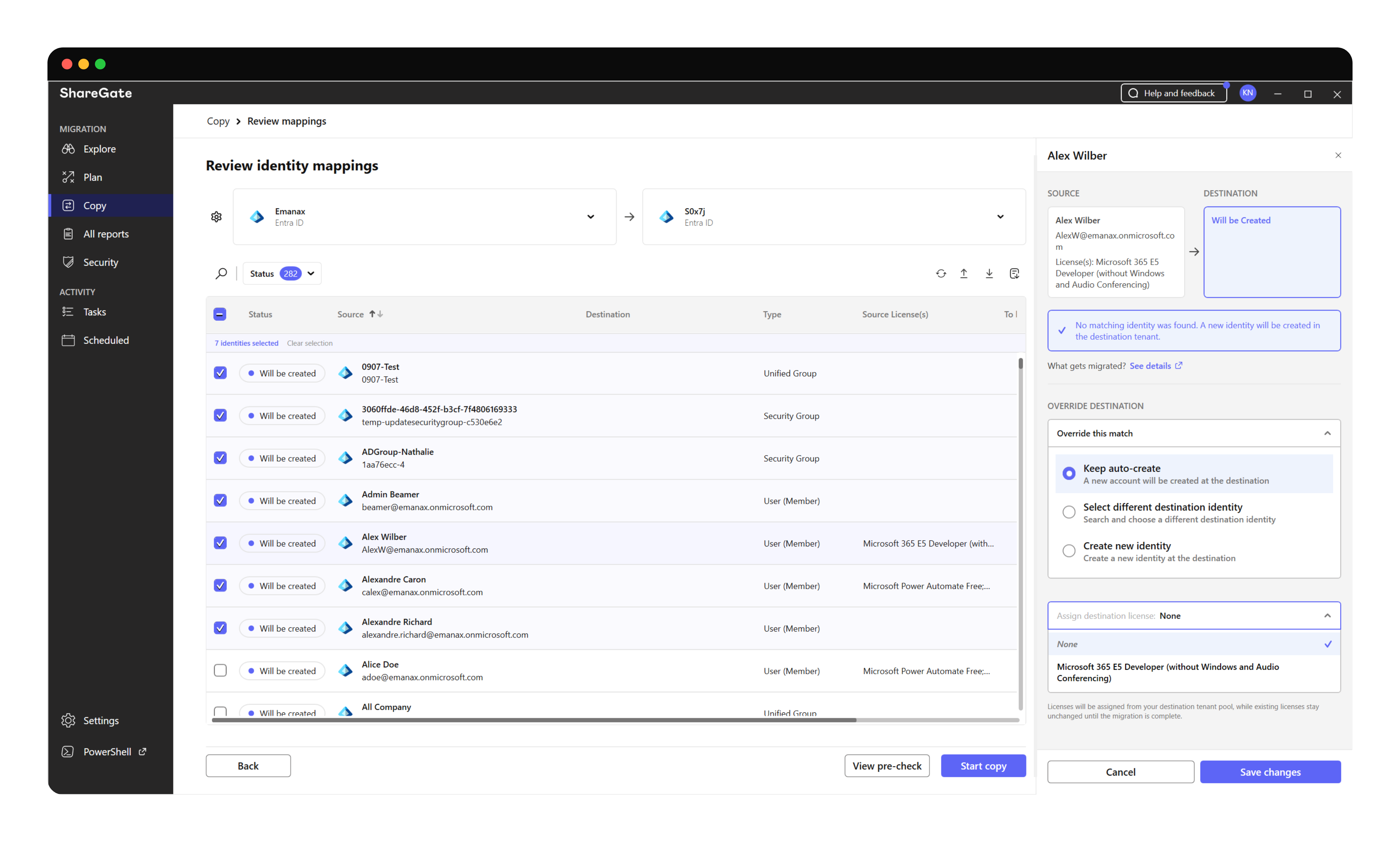
- Lizenzzuweisung. Ziellizenzen werden als Teil der Migration selbst zugewiesen, sodass Benutzer bereit für die Postfachmigration ankommen, anstatt darauf zu warten.
- Persistente Identitätszuordnung. Speichern Sie den Plan und führen Sie ihn in Wellen erneut aus, ohne von vorne zu beginnen. Das ist der Unterschied zwischen einem echten Projekt und einem manuellen Albtraum.
- Benutzerdefinierte Domain-Zuordnung. Definieren Sie, wie sich Domains zwischen Quelle und Ziel übersetzen, und entsperren Sie Multi-Domain-Kunden, deren Migrationen genau an diesem Schritt stockten.
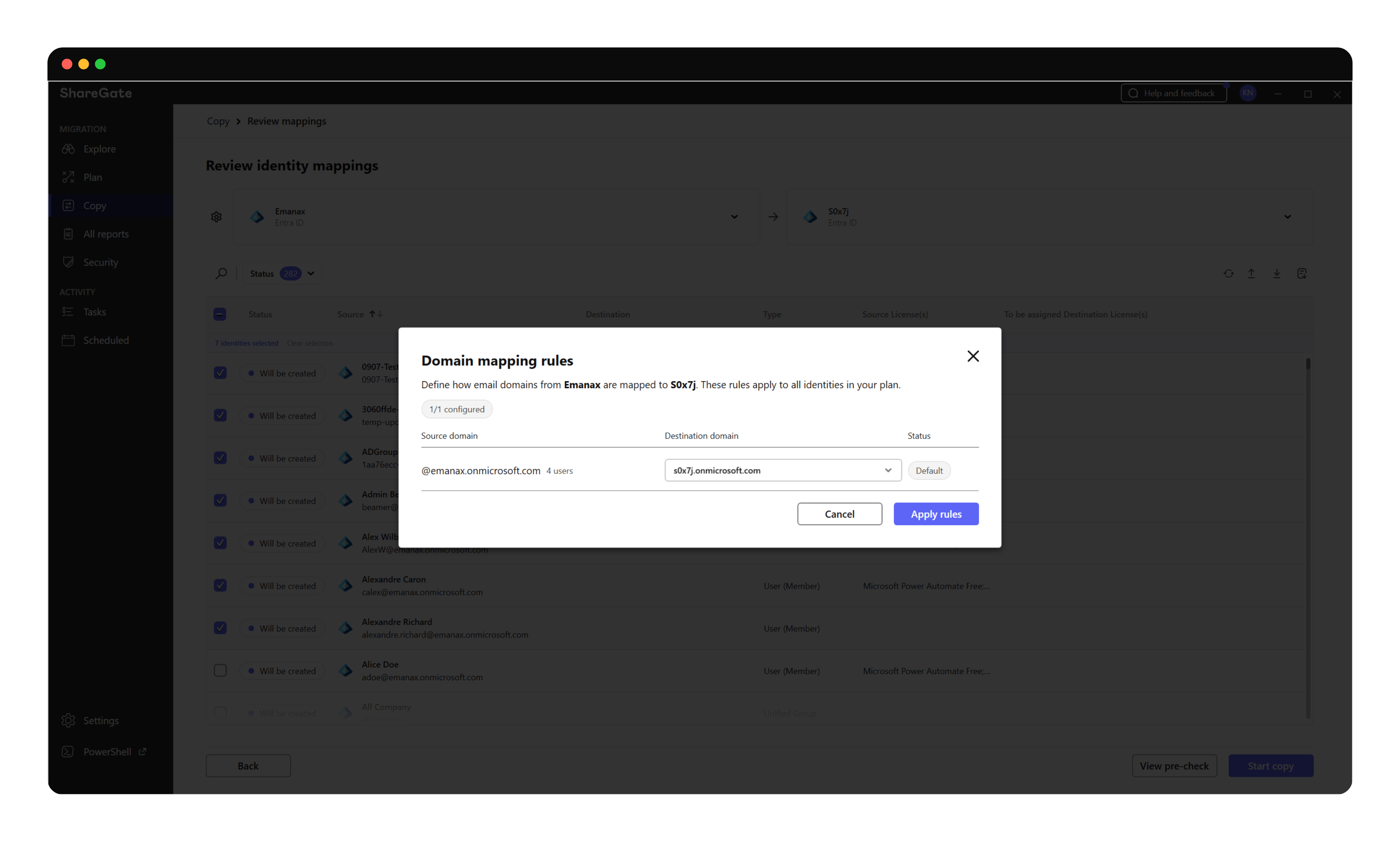
Viel mehr im Umfang. Viel weniger Rätselraten.
Flexible Verschlüsselung: Lokale Migrationsdaten wiederherstellbar halten
ShareGates lokale Migrationsdaten waren immer an die Maschine und den Benutzer gebunden, auf denen sie erstellt wurden. Das funktioniert gut, bis Sie eine VM neu aufbauen, Maschinen wechseln oder mit dem Support Fehlersuche betreiben.
Flexible Verschlüsselung behebt das. Das neue Modell entkoppelt den lokalen Datenschutz von der Maschine, sodass Ihre Daten über Upgrades, Infrastrukturänderungen und Umgebungsneuerstellungen hinweg wiederherstellbar bleiben. Beim Start erhalten Sie zwei Optionen: die bestehende Windows-basierte Verschlüsselung oder DPAPI (Standard, nichts ändert sich, wenn Sie nichts anfassen) und eine neue zertifikatbasierte Option für Umgebungen, die Konsistenz über Maschinen und Sitzungen hinweg benötigen.
Wechseln Sie Anbieter, indem Sie zu Einstellungen → Sicherheit → Verschlüsselungsanbieter gehen. Bestehende Daten werden im Hintergrund aktualisiert, während die App benutzbar bleibt. Sie können es jetzt ausführen, für später planen oder überspringen. Ein lokales Backup wird in jedem Fall erstellt.
Dies stabilisiert auch inkrementelle Kopieworkflows – insbesondere Teams-inkrementelle Migrationen – die auf lokal persistierte Sitzungshistorie angewiesen sind.
Weniger Eskalationen, weniger Überraschungen. Verfügbar in allen Stufen ohne Paketierungs- oder Lizenzierungsänderungen. Es wird schrittweise eingeführt und sollte bis zum 5. Juni 2026 für alle verfügbar sein.
Das war Mai.
Mehr Automatisierung, stärkere Sicherheit und ein besseres Fundament für das, was kommt. Schauen Sie sich die öffentliche Produkt-Roadmap an, um zu sehen, was als nächstes kommt.
Bis zum nächsten Monat hoffen wir, dass Ihre Mandanten sicher und Ihre Migrationen nahtlos sind!


.avif)





Nicht nur migrieren, sondern ShareGate.
Keine nutzerbasierte Preisgestaltung. Keine zusätzlichen Tools. Keine Überraschungen.