.svg)

.avif)
Microsoft 365 governance made simple
Fix what matters, faster, without complex rules or tool switching!
Free trial%20(1).avif)
Master Hacks: Migrate like a pro
Check out our video series to help you turn migration projects into masterpieces!
Table of contents
Messy permissions? Security blind spots? Data everywhere except where it should be? When SharePoint feels more like a dumping ground than a well-oiled machine, it can wreak havoc on your security posture, compliance, and day-to-day operations.
For most businesses, SharePoint has grown to become more than just basic document storage. Nowadays, the platform supports collaboration, access control, and content visibility across M365 apps and services. Without an effective SharePoint content management strategy, your data security will be at risk and your Copilot readiness can take a hit as Copilot outcomes can be limited by messy permissions and content sprawl.
In this guide, we lay out the importance of a robust strategy and share some best practices for SharePoint content management.
Understanding SharePoint’s role in Microsoft 365
SharePoint is M365’s collaborative document management and storage platform, helping you keep track of files, pages, and sites. Once you’ve set up permissions, SharePoint also facilitates content-centric collaboration by controlling how information is stored, shared, secured, and governed.
Rather than working as a standalone repository, SharePoint connects to other M365 services, helping you manage, share, and surface content internally. Integrations include:
- Teams: Whenever you create a new team within MS Teams or a new M365 group, you’ll automatically generate a connected SharePoint site and default document library. From here, you can share files, manage document access, and collaborate on project files.
- OneDrive: OneDrive for Business uses SharePoint Online infrastructure, providing each user with their own personal document library. Because they share the same DNA, many of the org-wide sharing policies you set in the SharePoint Admin Center will also apply to OneDrive. But actual access to specific files and folders is still managed on a per-user and per-item basis, keeping personal work private by default.
- Power Automate: After a little tinkering in Power Automate, you’ll be able to automate approvals, content-related processes, and notifications within SharePoint.
- Microsoft Search: Whenever you use Microsoft Search (including via Copilot), you’ll surface content from SharePoint if you have the relevant permissions.
- Microsoft Purview: You can carry out a baseline level of records management on SharePoint via Purview; however, advanced features are locked behind additional licensing.
Key components of SharePoint content management
Content in SharePoint is arranged in different tiers, and understanding them will help you better manage your data. Here are the main components:
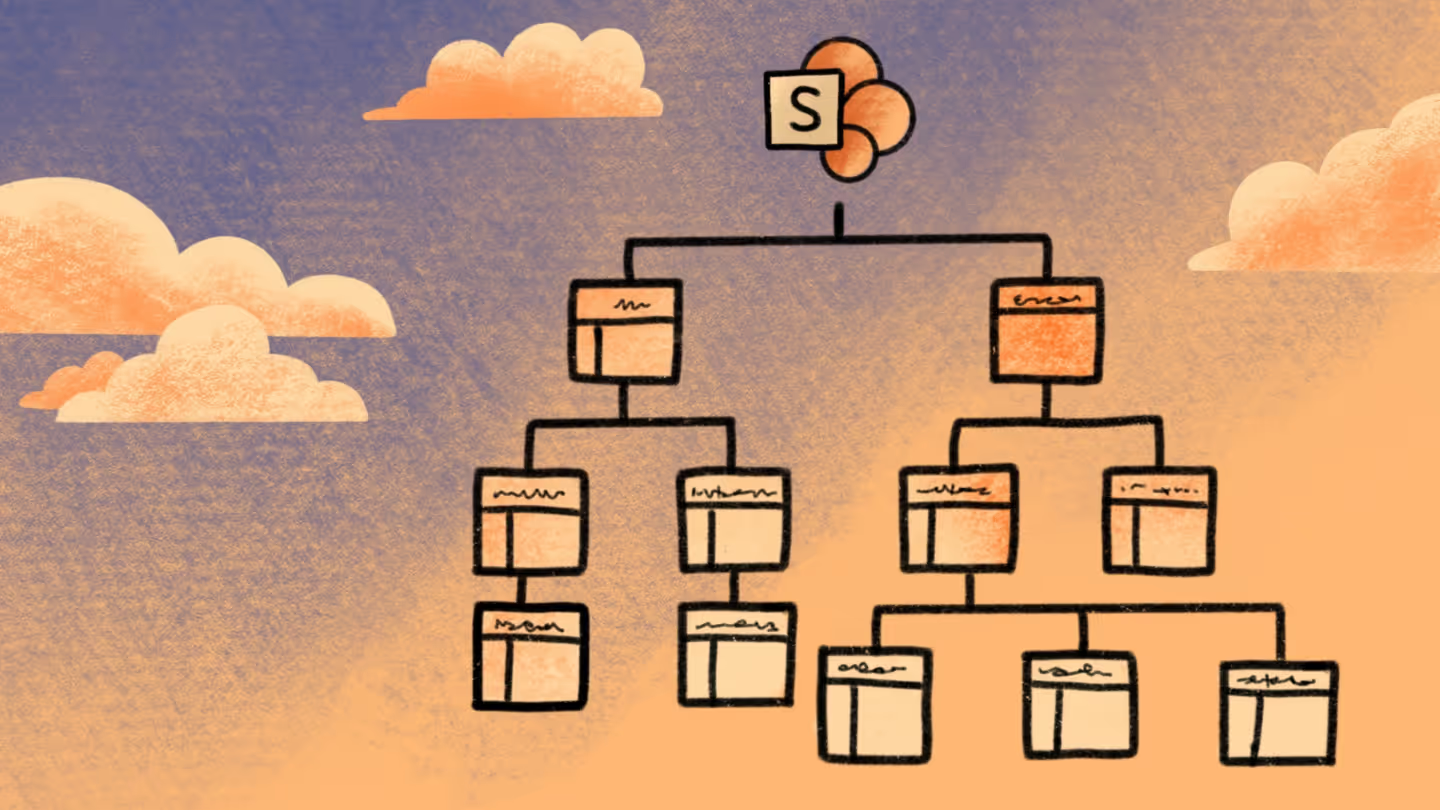
- Sites: A site is a top-level container that stores content and defines how it can be accessed. In modern SharePoint, you have the option of creating a team site (for collaboration) or a communication site (for broadcasting information). You can also link both options to a hub site, which organizes, connects, and brands team and communication sites.
- Libraries: Document libraries are storage repositories within sites. They inherit the site’s parent permissions by default, but you can break inheritance and assign unique permissions at the library level if needed.
- Lists: Used to store structured data in SharePoint, lists are commonly used for inventories, requests, or status updates. Just like libraries, they auto-inherit site permissions but you can break inheritance and assign unique permissions to the list (or even specific items) when needed.
- Metadata and taxonomy: Managed metadata helps you organize and describe content by letting you add properties and classification structures through managed terms and columns. SharePoint metadata and taxonomy also help make searching for information much easier.
- Content types: Enforce consistent structure for content categories by applying reusable definitions known as content types across sites and libraries.
- Version history: You can keep track of any changes to your files through SharePoint’s version history records, which allow you to view or restore past file versions.
- Content organizer: While Content Organizer is a legacy (classic/SharePoint Server) feature for rule-based routing. In SharePoint in Microsoft 365, routing is more commonly handled through modern automation options (like library automation or other Microsoft 365 workflows), depending on your scenario.
Best practices for modern SharePoint content management
Managing SharePoint becomes much easier when you have a scalable structure in place. Here are some actionable recommendations to keep in mind when building your SharePoint strategy:
- Keep your site architecture logical: Use team sites for collaboration, communication sites for broadcasting information, and hub sites to bring related content together. Start with a clear information architecture (a flat site structure) and build from there.
- Stick to clear and consistent naming practices: Stick to standardized names for all your sites, libraries, files, lists, and folders to reduce confusion. Document and share your naming conventions for everyone to see.
- Lean on structured metadata: Metadata enriches your files and makes it easier for you (and Copilot) to find the content you need. Use columns, managed terms, and content types to classify content and reduce reliance on folders alone.
- Always enforce least-privilege access: Users should only ever have access to the content they have permission to view. Manage permissions at the site level and only and only use unique permissions when you truly need them—prefer folders over individual files to keep unique permission scopes under control.
- Run a content cleanup regularly: Archive or delete any outdated or irrelevant content. Regular cleanups reduce clutter and keep your SharePoint sites usable and easy to navigate.
- Build with Copilot in mind: Consistent naming, well-applied metadata, and clear content structures make it easier for Copilot to surface the right information. Copilot only surfaces content people already have access to—so tightening permissions helps prevent overshared content from becoming even easier to find.
Scaling Microsoft enterprise content management access
As your company grows, even small content management inefficiencies can quickly become major cracks in collaboration. From content sprawl and unmanaged guest access to ownership drift and inconsistent permissions, SharePoint can get messy, fast.
Maintaining a consistent structure helps mitigate these risks. While Microsoft Purview provides the core data protection and compliance controls—such as sensitivity labels, retention policies, and data loss prevention (DLP)—to protect and govern the data itself, SharePoint Advanced Management (SAM) helps organizations manage SharePoint and OneDrive environments by controlling site lifecycle, permissions, and content sprawl at the site level.
Third-party tools can also offer invaluable support. For example, ShareGate Protect complements Microsoft’s native platforms by giving you a unified view of your governance drift. It provides clearer visibility into sharing and permissions across SharePoint and OneDrive, allowing you to spot oversharing and tighten access faster than you could by manually auditing individual site settings.
Maintain a clear, controlled Microsoft 365 environment with ShareGate Protect
Governance breaks down when you can’t see how access actually behaves across SharePoint, Teams, and OneDrive. Oversharing grows quietly. Ownership drifts. Inactive workspaces add risk and cost.
ShareGate Protect unifies visibility across Microsoft 365 so you can see where access exposure exists, understand why it matters, and take action safely. Governance Risk Assessments surface oversharing, guest access, lifecycle drift, and Copilot exposure in one place.
Instead of switching between admin centers or relying on scripts, you can fix issues directly from the insight view and maintain practical, day-to-day governance with clear, traceable remediation.
To learn how ShareGate Protect can help you get the most out of your SharePoint and M365 environments, request a demo today.

Frequently asked questions

Yes, SharePoint is a CMS. The platform offers document and permissions management, metadata, governance, and web content. While other CMSs for SharePoint are available, they don’t offer the same level of native integration.
SharePoint’s main draw is its natural integration with other Microsoft 365 platforms like Teams, Search, and Copilot.
SharePoint features include sites, libraries, lists, metadata, content types, versioning, and permissions. You can also access some advanced features like records management through Microsoft Purview, with additional licensing.
When you combine SharePoint’s native features with tools like ShareGate Protect, which offer more visibility over your entire environment, managing the content lifecycle becomes much more straightforward. With consistent architecture and clear ownership rules, supplemented by a clear overview of permissions and potentially over-permissioned sites, you can take direct action to manage content at scale.





.png)




.avif)




Don’t just migrate it, ShareGate it.
Your source is never touched — ShareGate only copies.
Re-running is safe, included, and free.