.svg)

%20(1).avif)
Master Hacks: Migrate like a pro
Check out our video series to help you turn migration projects into masterpieces!
Table of contents
After SharePoint, Exchange Online mailbox migration is right up there as the top workload in Microsoft 365 migrations.
It’s also where things usually get...interesting. Mailbox migrations can be full of moving parts. Not surprising, if you've managed one before.
Every migration wave can behave differently. Recurring meetings don’t always migrate cleanly. Archive mailboxes need to be accounted for alongside primary mailboxes. Throughput can fluctuate. And without strong mailbox-level diagnostics, you often don’t see issues until validation, at which point it’s tough to course-correct.
That’s why we built mailbox migration into ShareGate Migrate. One tool. All your workloads. Way less stress. You get more predictable mailbox workflows with clearer visibility, so you can reduce variability across waves, plan with greater accuracy, and migrate with confidence.
Let’s dig into mailbox migration with ShareGate Migrate.
Why mailbox migration is risky in tenant-to-tenant projects
Mailbox migration is where tenant-to-tenant projects can carry the most risk because it can be unpredictable. Here’s why.
1. Mailboxes don’t always behave in the way you expect
Exchange Online behaves differently from content workloads. Recurring meetings follow Exchange Online rules; calendar items land in patterns Microsoft defines; mailbox structure varies; archive mailboxes move alongside primary mailboxes...you get the picture.
If you don’t plan for that behavior, you can run into rework, longer validation cycles, and user-visible differences after cutover.
2. Native tools add complexity
Ever run into this during a migration? You’re using Microsoft’s cross-tenant mailbox migration tool and find yourself managing PowerShell scripts, CSV uploads, and DNS configuration along the way.
It works, but it takes precision, coordination, and time your team could be spending elsewhere.
The challenge isn’t just the manual work. Mailbox migrations already come with enough variability on their own. When diagnostics and visibility are limited, IT teams can’t catch issues early (when they’re easier to fix). Instead, issues show up after cutover when employees are impacted and your team is left fixing them manually.
And because mailbox migration is licensed separately in Microsoft 365 tenant-to-tenant scenarios, budget planning can get more complicated than expected.
3. Tool sprawl and unpredictable pricing
In many tenant-to-tenant projects, mailboxes are handled separately from the rest of the migration.
That often means introducing another tool and another workflow to manage. So, pricing that felt straightforward at the start can feel less clear as the scope takes shape.
On top of that, licensing isn’t always as simple as it looks. Costs can add up when you factor in Microsoft 365 tenant-to-tenant migration licensing, Exchange Online licensing needs, potential add-ons, and third-party tools.
The solution: Predictable tenant-to-tenant mailbox migration and clear visibility with ShareGate Migrate!
If you're already using ShareGate Migrate for SharePoint, OneDrive, and Teams migration, you can handle mailboxes the same way. It's included in Migrate Pro and Migrate Enterprise; no extra tools, no per-mailbox licensing, no add-ons.
The difference:
- More predictable migration waves. Fewer surprises as you move from one wave to the next.
- Issues caught earlier. Diagnostic Mode and mailbox-level reporting help you spot problems before cutover, reducing the amount of investigation during validation and stabilization.
- Less cleanup after migration. Better visibility upfront means fewer manual fixes during validation and stabilization.
- A workflow you can repeat. A guided Exchange Online process makes it easier to standardize mailbox migrations and reduce wave-to-wave variability.
ShareGate Migrate helps simplify tenant-to-tenant migrations across Microsoft 365. With the Copy mailboxes feature, you can migrate mailboxes between tenants with built-in mapping and configuration support.
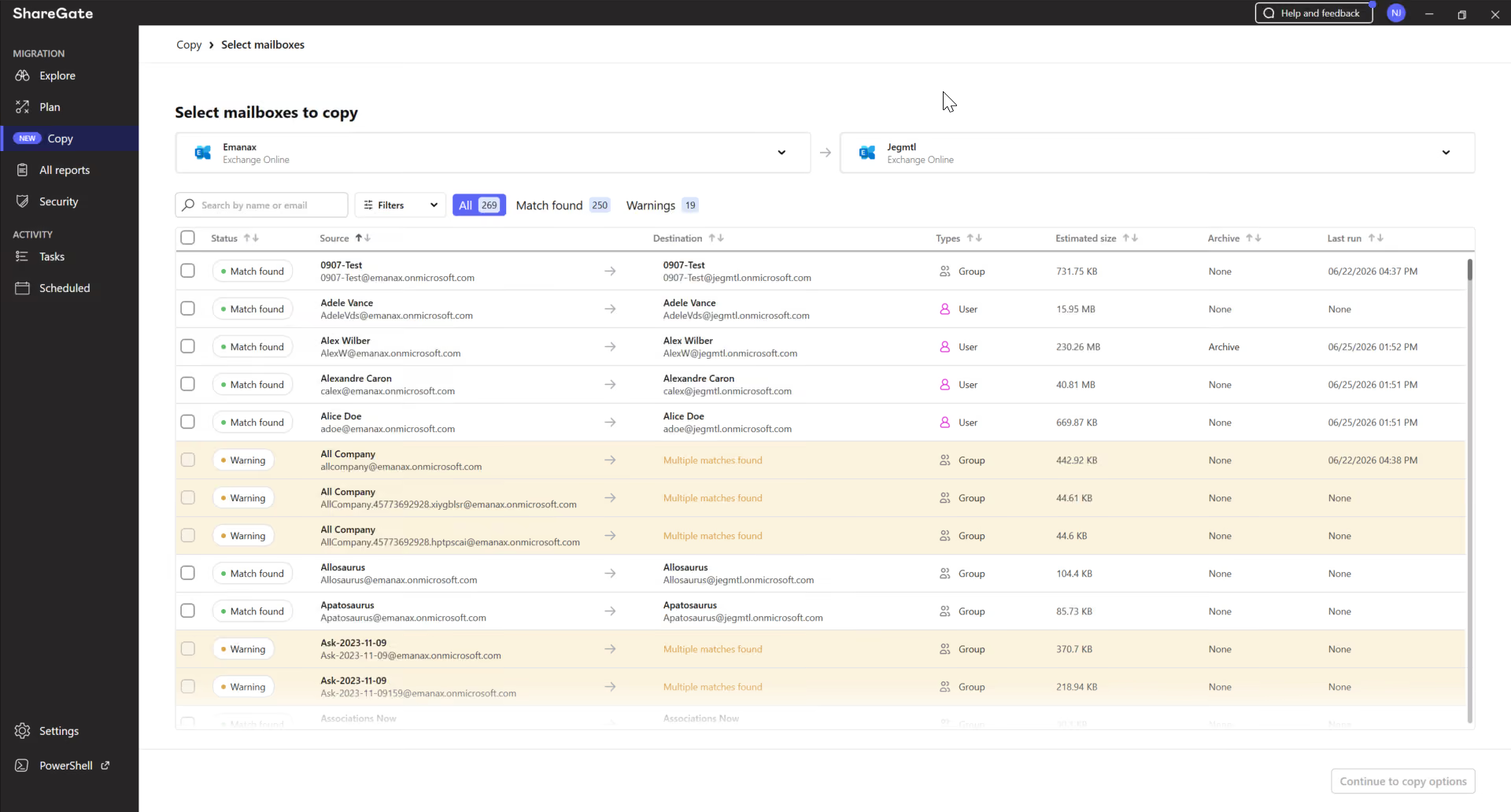
- Check before you go—view a summary of your configured migration before you make the move. Includes an alert for unmapped mailboxes.
- Incremental migration—Copy over what has changed since your initial mailbox migration so your users don’t lose the content created during that time.
- In-place archive mailboxes—migrate archive content alongside primary mailboxes, or complete it later using incremental migrations so you can phase large projects and reduce initial cutover time.
- Migrate calendars—migrate appointments, recurring and group events, and Teams meetings, including event attachments and privacy settings.
- Migrate messages—including shared mailboxes, attachments, and folders to your destination with their essential attributes, such as flags, categories, and importance.
- Server-side rules—maintain user rules such as redirecting or blocking messages, so inboxes stay clean and organized.
- Migrate contacts—including contact folders with user customizations such as categories and images.
- Group mailbox migrations—migrate the group mailbox email, ensuring the destination group already exists in the target tenant.
- Migrate Litigation Hold configuration—when Litigation Hold is detected, ShareGate migrates the hold configuration to the target mailbox so enforcement continues after migration.
- Finesse with filters—use filters to copy 3 or 6 months of messages or set a custom timeframe.
- Mapping—Automate mailbox and recipient mapping to ensure alignment between environments. Or, customize with mapping configurations manually, or upload a custom CSV file—your choice!
- PowerShell commands—use ShareGate’s PowerShell module to schedule and customize cross-tenant mailbox migrations.
Expand your IT toolbox without adding more tools. SharePoint, Teams, Planner, OneDrive, Google Workspace, file shares, and more migration workloads—along with tenant-to-tenant mailbox migrations, too!
.avif)
Step-by-step walkthrough of migrating Exchange Online mailboxes with ShareGate Migrate
Migrate your users’ Microsoft 365 mailboxes as part of your migration projects with ShareGate’s Copy mailboxes feature.
- Select Copy from the sidebar.
- Select the Copy mailboxes tab.
- Click Copy mailboxes.
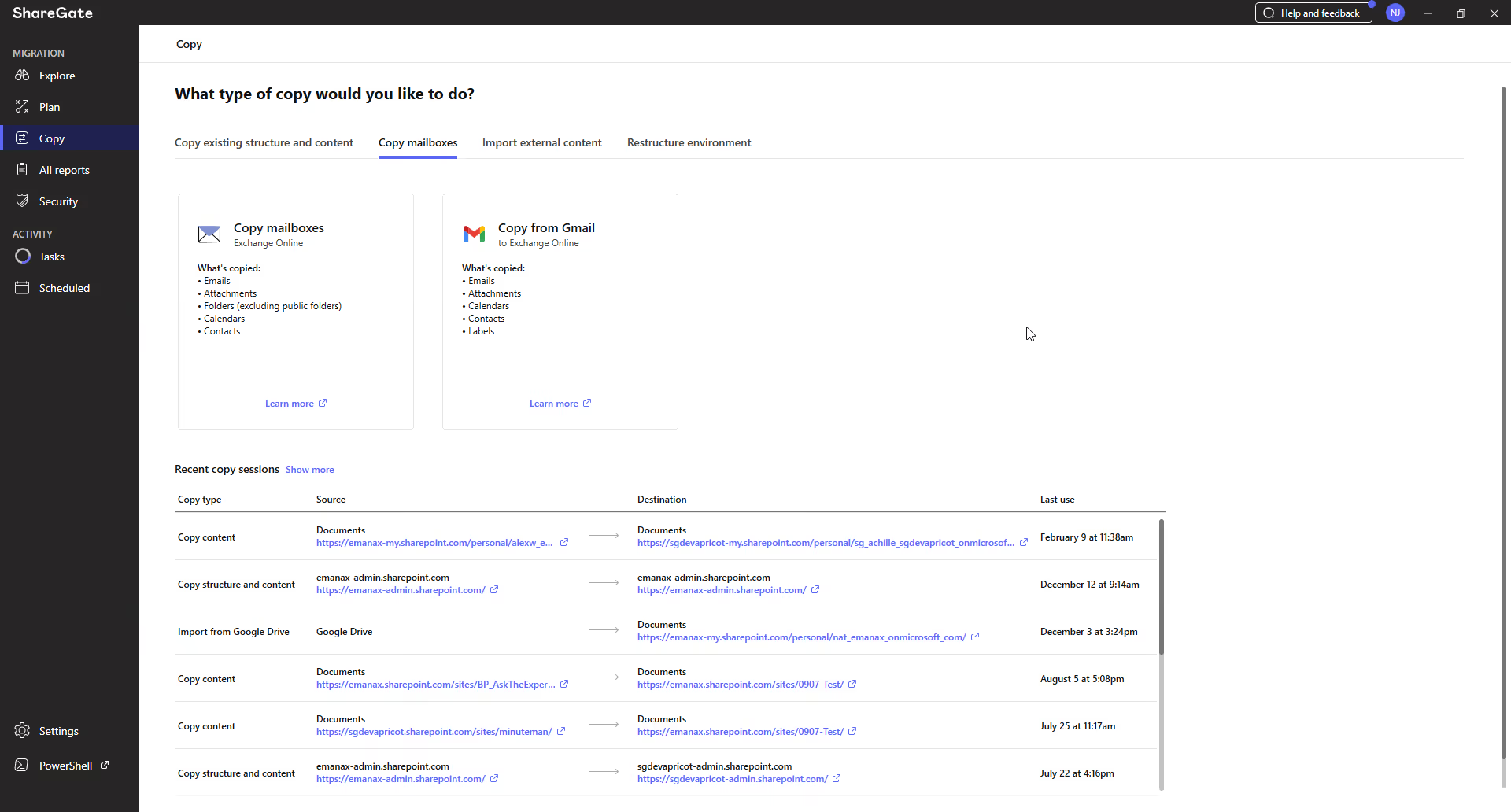
There are a few ways to select the mailboxes you want to migrate:
- You can use the 🔎 search bar to find specific mailboxes.
- You can click on the Filter by icon in the Mailbox type column header to filter by User, Shared, or Resource (room and equipment) mailboxes.
- You can select all your listed mailboxes with the check box in the Mailbox column header.
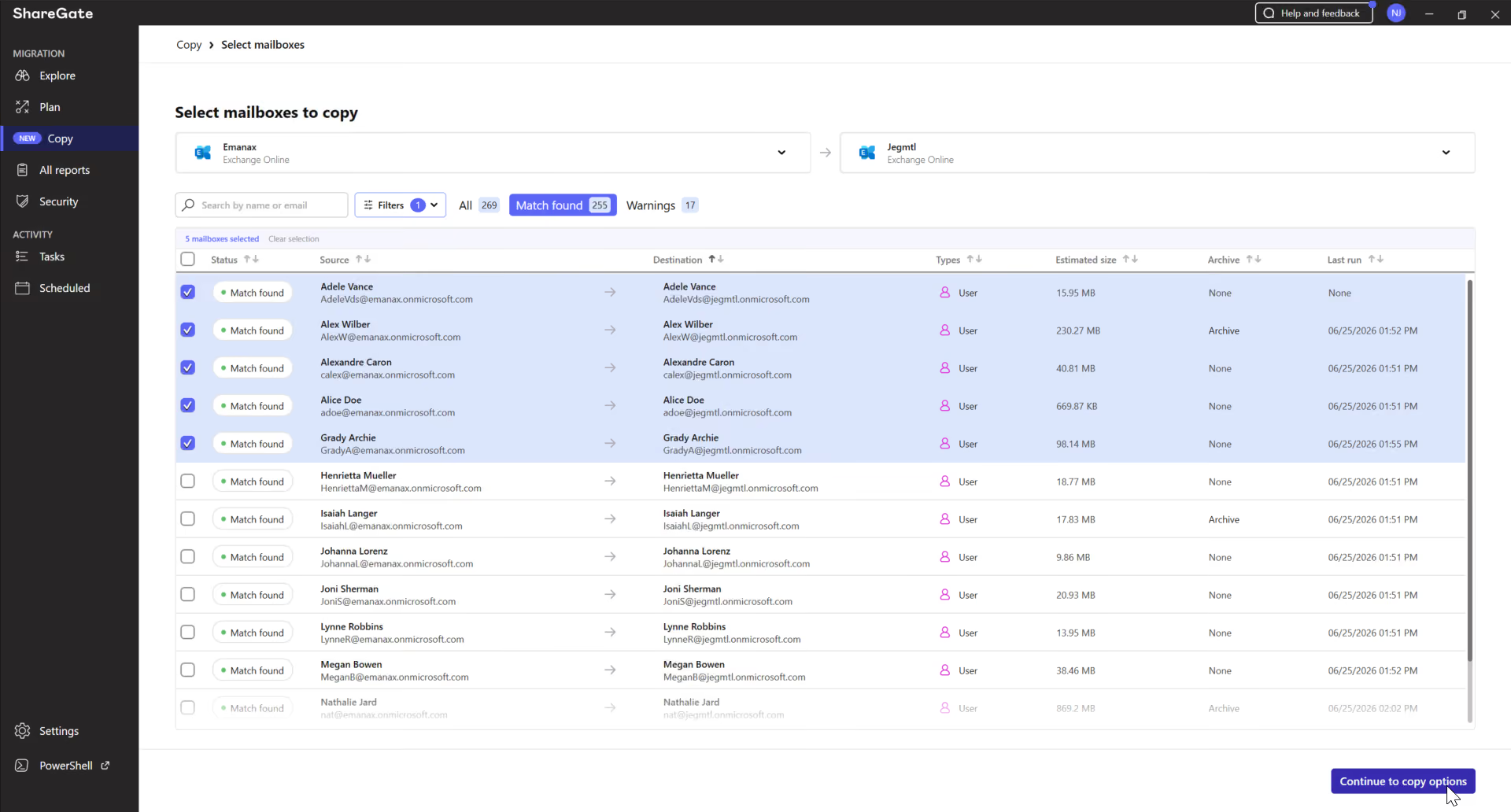
See our technical documentation for full instructions on how to copy mailboxes in ShareGate Migrate.
What’s next for smooth mailbox migrations
We’re working on new and advanced features for your mailbox migration projects, such as mailbox-level diagnostics and reporting improvements
Most of our updates are based on feedback from our users, so make sure to let us know what would help make your life easier! Give us your feedback about what else you’d like to see in these features and for ShareGate more broadly.
Curious about what's coming next? You can always check out our public product roadmap.



.avif)















Don’t just migrate it, ShareGate it.
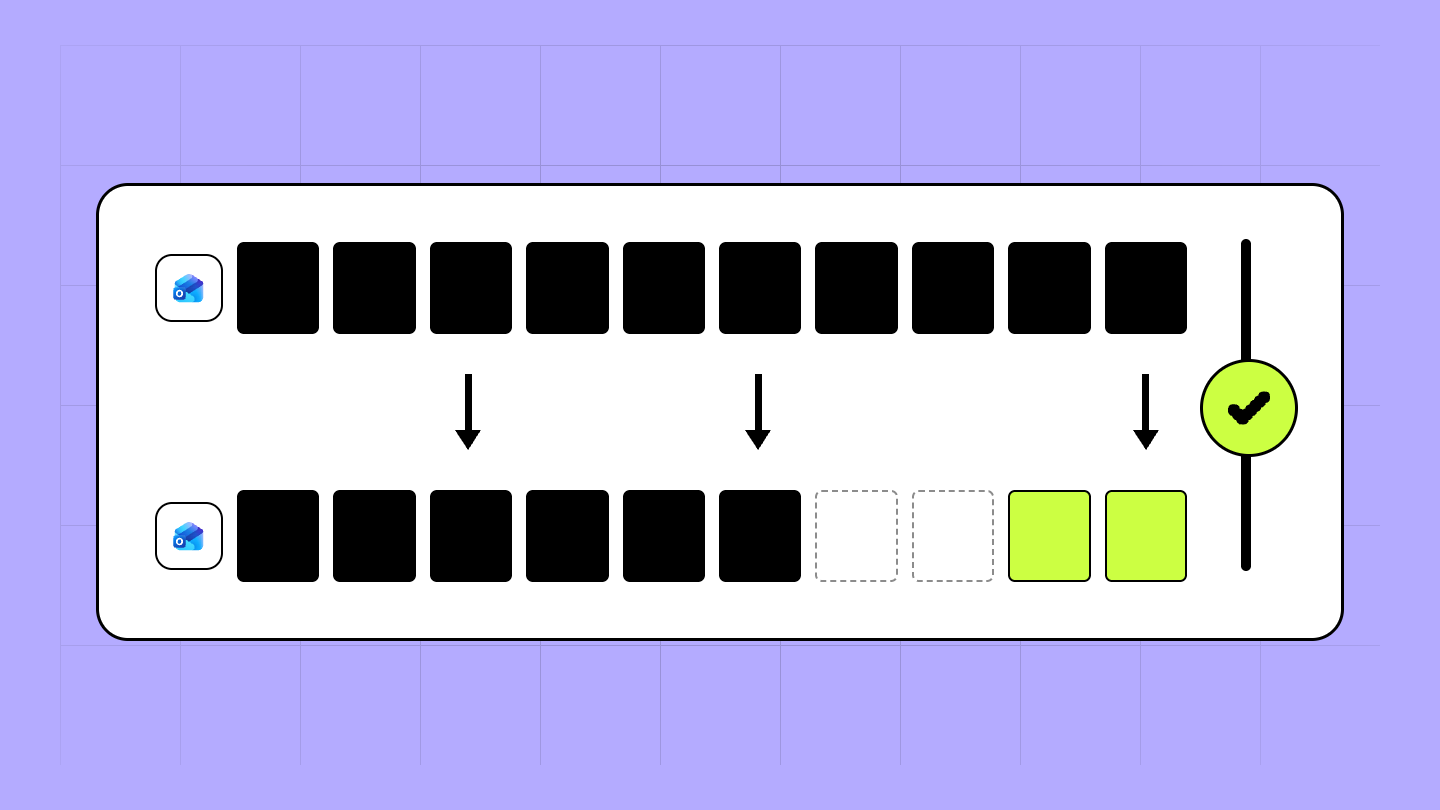
Your source is never touched — ShareGate only copies.
Re-running is safe, included, and free.